Quick answers
Why do poured concrete walls crack at all?
Concrete shrinks as it dries. The American Concrete Institute says so plainly in its report on concrete cracking: when concrete dries, it contracts. A basement wall is long and held in place by the footing, so the shrinkage pulls it apart at its weakest points. The result is usually a thin vertical crack, often near a window corner or in the middle of a long wall.
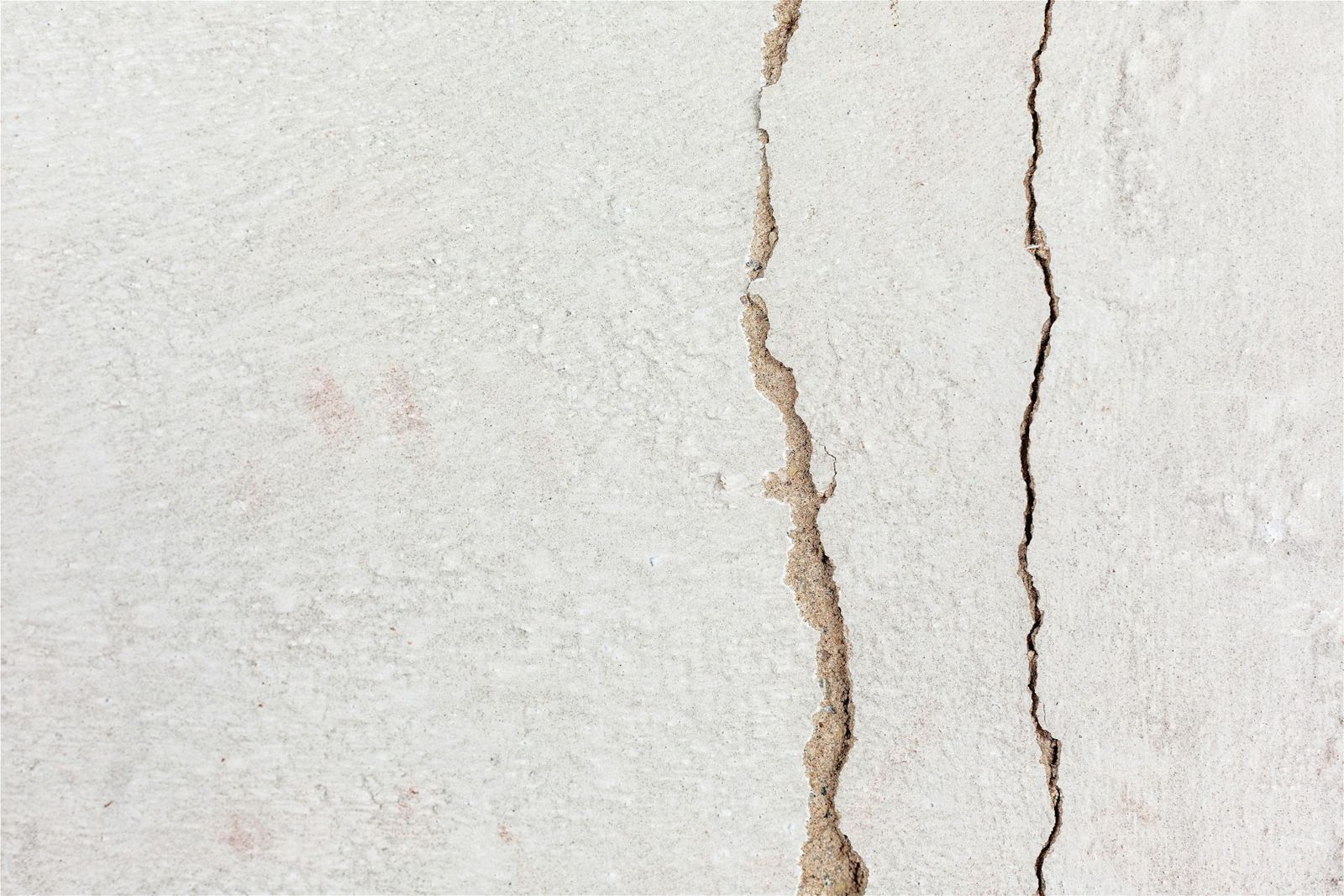
Those cracks often stay the same size for years. The trouble is water. When the soil outside is wet, water follows the crack straight into the basement.
Which cracks are normal?
| Crack | What it usually means | Next step |
|---|---|---|
| Thin vertical crack, poured wall | Shrinkage. Leaks are common. | Seal it if it leaks |
| Hairline crack, dry | Shrinkage, no water path yet | Mark it and watch it |
| Diagonal crack from a window corner | Shrinkage at a weak point | Seal it if it leaks |
| Horizontal crack | Soil pressure on the wall | Structural engineer |
| Stair-step crack, block wall | Wall or footing movement | Structural engineer |
| Any crack with one side sticking out | The wall moved | Structural engineer |
The home builders association uses width bands. In its guide to common cracks, hairline cracks up to 1/8" are negligible to slight, and 3/16" to 9/16" are moderate. It flags horizontal cracks with bowing or leaning walls as a real concern.
Which cracks are serious?
Watch for these signs:
- A crack that runs sideways along the wall
- Stair-step cracks along the mortar of a block wall
- A wall that bows or leans into the basement
- One side of the crack sitting further out than the other
- A crack that gets longer or wider over a few months
If any of those match, our guide on when a crack needs an engineer explains what an inspection covers and what to do while you wait.
How do you know if your crack is growing?
Draw pencil marks at both ends, write the date beside them, and measure the widest point. Check again each month and after big storms. Our crack monitoring walkthrough shows a simple log you can keep on the wall itself.
What should you do about a leaking vertical crack?
Seal it from the inside with polyurethane foam injection. It is the same method many waterproofing crews use on poured walls, and you can do it in an afternoon plus waiting time. The step-by-step injection guide covers the whole job, from cleaning the crack to the hose test.
Before you buy anything, run your crack through the six-question crack check. It flags structural signs before you spend money on a kit.